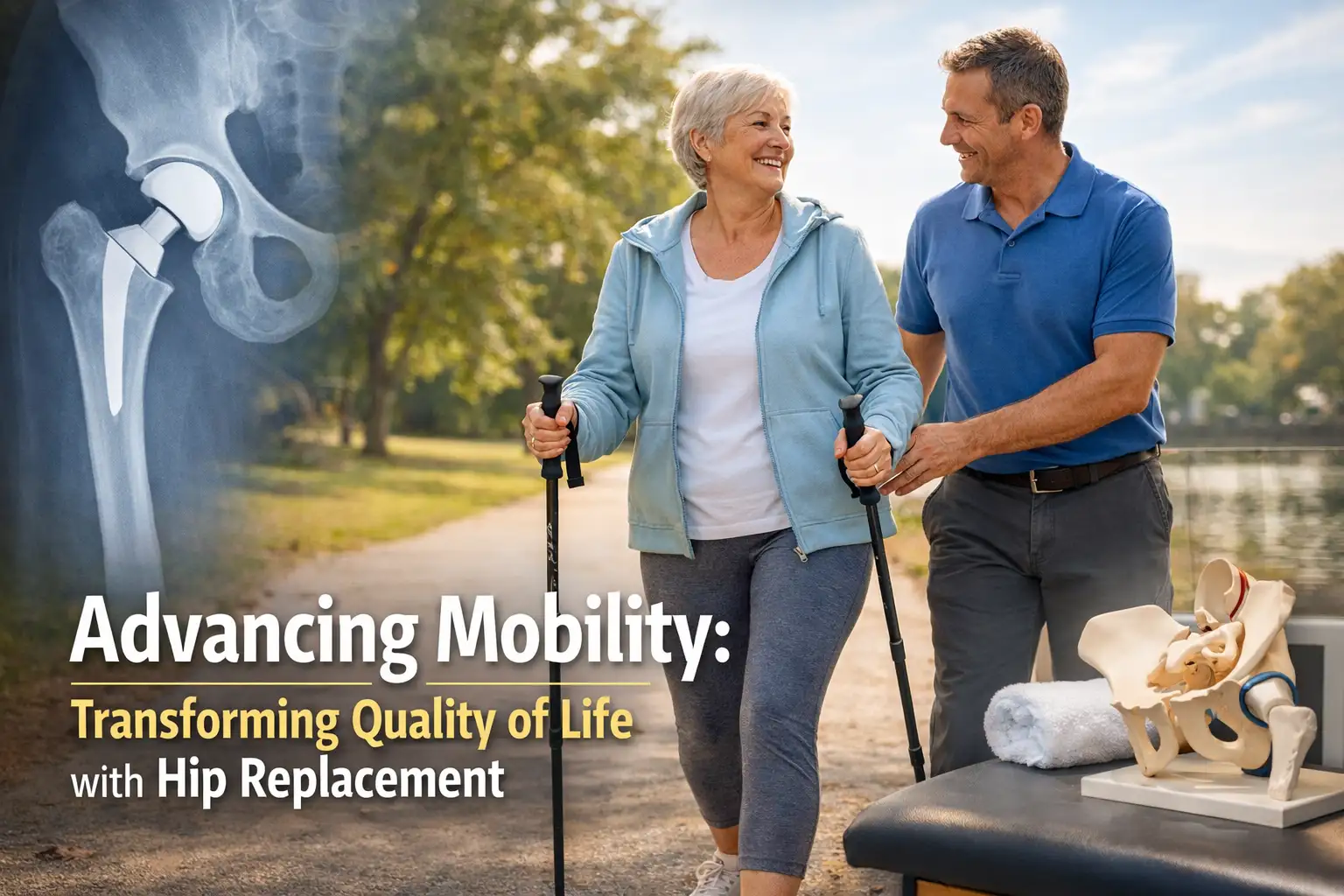
If you or someone you love is staring down a hip replacement, you already know it's more than just a surgery — it's a turning point. Done right, it gives you back the walks, the grandkids on your lap, the golf swing, the independence. At Be On The Move, we've walked alongside dozens of Palm Beach County residents through this exact journey, and the recovery you have at home matters just as much as the surgery itself.
Understanding Hip Replacement
Hip replacement surgery removes the damaged bone and cartilage in your hip joint and replaces it with a durable artificial implant — a new ball, a new socket, a fresh start. It's one of the most successful orthopedic procedures in modern medicine, with over 95% of patients reporting significant pain relief and restored mobility.
What to Expect Before Surgery
The patients who recover fastest are almost always the ones who prepared before they ever went to the OR. That means having an honest conversation with your surgeon about your medical history, your medications, and your home setup — and starting pre-operative Physical Therapy to strengthen the muscles around the hip before they're asked to do the hard work of recovery. We call this "prehab," and Palm Beach County patients who do it typically walk sooner, climb stairs sooner, and get off pain medication sooner.
The Surgery Itself
The procedure itself usually takes one to two hours. Thanks to advances like anterior approach techniques and robotic-assisted surgery, many patients are up and walking within hours of their procedure and home within a day or two. The real work — the work that determines how you'll feel six months from now — begins once you're back in your own bed.
Recovery and Rehabilitation
This is where we come in. Recovery doesn't happen in a clinic waiting room — it happens in your kitchen, on your staircase, in your shower, in the driveway. At-home Physical Therapy meets you exactly where the real obstacles live:
- Weeks 1-2 — Protect and Move: Gentle ankle pumps, controlled weight-bearing, safe transfers in and out of your actual bed and chair, pain and swelling management, and learning to navigate your home without compensating in ways that slow healing.
- Weeks 3-6 — Rebuild Strength: Progressive hip strengthening, stationary cycling, standing balance work, and getting back to everyday tasks — dressing, cooking, walking the dog — without a walker.
- Weeks 7-12 — Restore Function: Advanced balance training, stair work, light resistance training, and preparing you to return to what you love, whether that's the pickleball court, the beach, or just keeping up with the grandkids.
The Benefits of At-Home Physical Therapy
There's no drive to a clinic, no waiting room, no shared equipment, no rushing to finish in 45 minutes. Just one therapist, one patient, one hour — in the environment where you actually need to function. For South Florida seniors, especially those who don't drive or have a spouse juggling caregiver duties, it's a game-changer.
Imagine six months from now: strolling down Worth Avenue, getting back on the golf cart with your neighbors, picking up your grandchild without wincing, sleeping through the night without hip pain waking you up. That's the goal — and it's absolutely within reach.
Conclusion
A hip replacement is a second chance at the life you love. Don't leave the most important part — the recovery — to chance. If you're in Palm Beach County and want personalized, one-on-one at-home Physical Therapy from a team that treats you like family, we'd love to hear from you. Contact us and let's get you moving.
See you soon,
//❤️ Trudy//
The information provided in this article is intended for general educational and informational purposes only. It is not a substitute for professional medical advice, diagnosis, or treatment. Always seek the advice of your physician or other qualified health provider with any questions you may have regarding a medical condition or before starting any new exercise program. If you experience any pain or difficulty with exercises or advice mentioned in this article, stop immediately and consult your healthcare provider. Be On The Move and its representatives do not assume any responsibility for any aspect of healthcare administered with the aid of information provided herein.