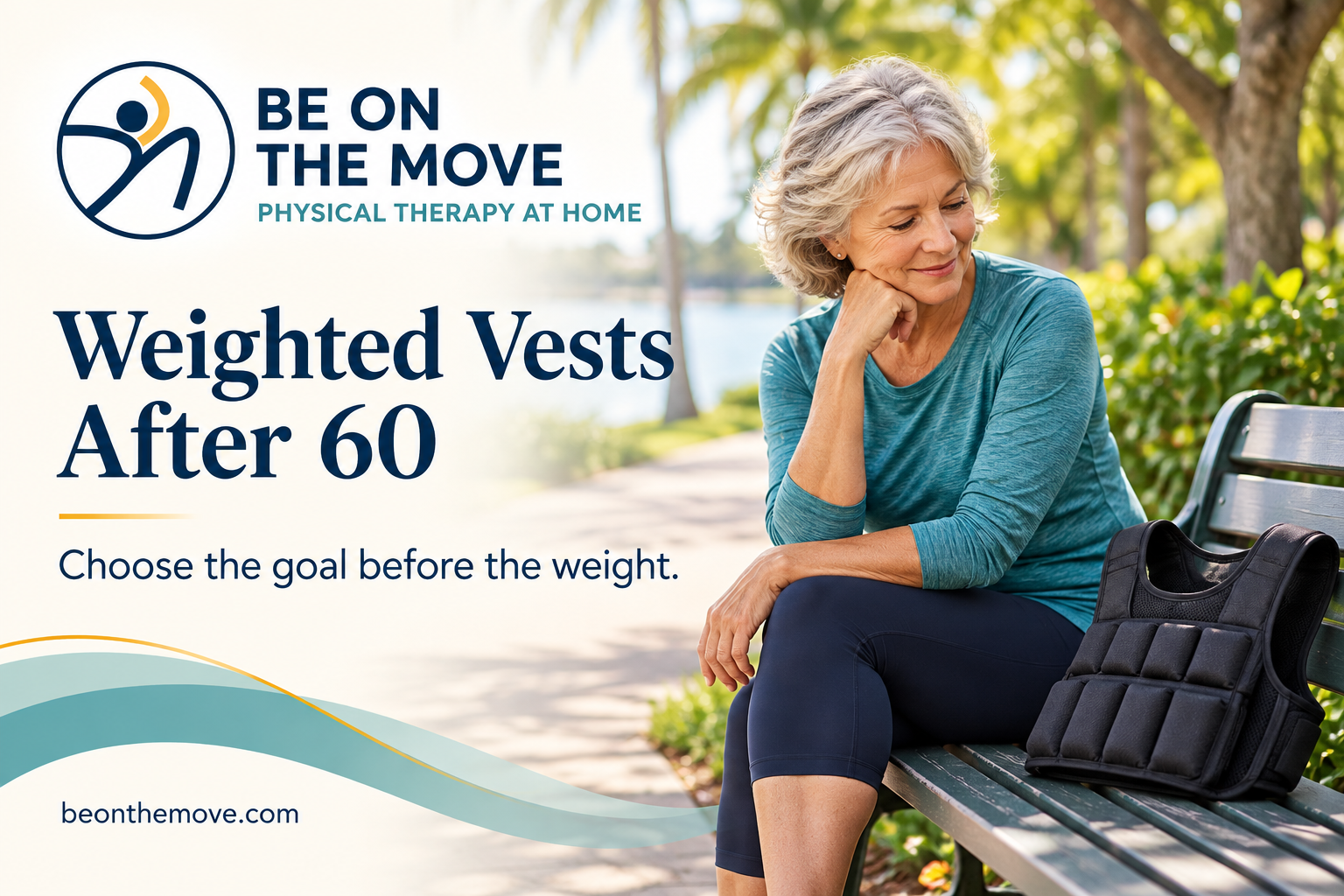
A popular walking accessory deserves a specific question
A weighted vest can make a familiar walk look like a more ambitious workout. The idea is appealing: keep the activity you already enjoy, add a piece of equipment, and perhaps get more from the same time outside. For adults over 60, however, the most useful first question is not how many pounds to buy. It is what you want the extra weight to accomplish.
Recent coverage in Parade and Cleveland Clinic, along with independent discussions in walking and bone-health communities, shows continued interest in these vests. That attention makes the subject worth examining. It does not establish how many American seniors use them or whether an individual reader should start.
Better endurance, stronger bones, and fewer falls are different goals. Evidence for one does not automatically support the others. Before making a purchase, separate those goals and consider how a vest would fit into the movement plan you already have. The right next step might involve equipment, but it might also be a conversation, a different exercise, or a more consistent walking routine.
Start with the goal, not the product
Write down one thing you hope to change. Instead of “get fitter,” try describing a daily activity: finishing a comfortable neighborhood walk, carrying out household tasks with less fatigue, or understanding why you feel unsteady when turning. These descriptions give your clinician something concrete to work with.
Then ask what would count as progress. A vest feeling comfortable is useful information about comfort. It is not a bone-density result. Feeling more confident may matter to you, but it does not tell us whether the number of falls has changed. Keeping those questions separate makes it easier to judge both advertising and your own experience.
There is also a practical question that rarely appears in promotional photos: would you actually want to put the vest on, adjust it, and take it off each time? Equipment that is awkward to manage may make a pleasant routine harder to maintain. You are allowed to decide that the extra complication is not worthwhile.
Bones: encouraging theories are not a treatment guarantee
A 2025 randomized trial in JAMA Network Open followed 150 adults aged 60 to 85 with overweight or obesity during a 12-month weight-loss program. Adding daily weighted-vest use did not significantly prevent hip bone loss compared with weight loss alone. The study also evaluated resistance exercise in that particular setting.
This is a finding about a defined population, program, and outcome. It does not mean every form of strength training or bone-loading exercise is ineffective. It does mean we should not advertise a walking vest as a proven way to protect the hips during weight loss. The corrected article notes changes to labels and units, not a reversal of the main conclusion.
If bone health is your priority, discuss your diagnosis, fracture history, current treatment, and exercise options with your healthcare team. A shopping decision should not replace that plan. Bring the actual product details if you already own a vest so the conversation can address its fit and design, rather than an imaginary one-size-fits-all version.
Balance: feeling steadier is not the same as measuring better balance
A small 2025 pilot study tested weighted vests in 34 adults aged 55 and older. Seventeen participants also tried a vest at home for two weeks. The vest conditions were not significantly associated with better results on the study's balance and stability measures.
Many participants nevertheless reported favorable impressions, including feeling more stable. That difference is important. A report of feeling better is a subjective experience; a timed mobility test is a measured performance; an actual reduction in falls is another outcome again. The study did not demonstrate that wearing a vest prevents falls.
For a reader who already worries about falling, that distinction can change the decision. Rather than using added weight as reassurance, ask for an assessment of the situations that feel difficult. Describe the turn, doorway, uneven surface, or moment of standing up that concerns you. Those observations can help focus a more useful discussion than asking whether a popular accessory “works.”
Endurance: a harder walk is not automatically a better walk
Adding load changes the task your body is doing. Cleveland Clinic's guidance discusses both the possible exercise benefits of a vest and the importance of starting cautiously and considering health limitations. A harder-feeling session should not be mistaken for evidence that every aspect of the workout has improved.
For example, imagine that your usual route is comfortable but a vest makes you shorten it, hurry home, or stop enjoying it. That experience deserves attention even if a tracker displays a higher effort estimate. The question is whether the change supports your goal and remains appropriate for you, not whether it looks more advanced.
Avoid universal promises about calorie burn or results per minute. Walking speed, terrain, load, and individual capacity all change the experience. A number from an online demonstration cannot tell you how a particular vest will affect your breathing, movement, or confidence on your own route.
Why research programs and casual vest wear are different
A 2026 review in Frontiers in Public Health describes a varied research landscape. Wearing a vest during daily activities is not the same intervention as a structured exercise program that uses progressively adjusted loading. Differences in participants, exercises, duration, and supervision make simple comparisons difficult.
When you encounter a claim, look for the missing details. Who was studied? What did participants actually do? How long did they practice? What changed, and what did not? If the headline says “bone health” but the study measured a different outcome, pause before treating the headline as advice.
You do not have to become a researcher to ask sensible questions. Save the link and bring it to your clinician. A useful discussion can be as simple as, “Does this study resemble my situation, and is this the best way to work toward my goal?” That leaves room for a recommendation tailored to you.
A pre-purchase conversation worth having
Before considering a weighted vest, tell your healthcare professional about osteoporosis or previous fractures, back or neck pain, recent falls, dizziness, heart or lung conditions, and any surgery-related restrictions. Mention a cane or walker you use and whether you need assistance getting dressed. These are reasons for an individualized assessment, not a checklist that can clear you for exercise online.
Ask practical questions: Can I put this on and remove it comfortably? Will it interfere with a prescribed walking aid? What should I notice about my posture and breathing? What would make us stop the trial? Would an equipment-free activity address my goal more directly?
Bring an honest picture of your current routine, including how often you walk and what limits you. Do not select a starting load just because an influencer uses a certain percentage of body weight. This article intentionally gives no universal weight or progression schedule. Your clinician should decide whether a trial is appropriate and what its boundaries should be.
If a clinician clears a trial, keep it easy to evaluate
A first trial should help you learn, not prove how much weight you can tolerate. Follow the individualized instructions you were given. Choose familiar, level surroundings and a setting where you can stop and remove the vest safely. Avoid combining the first attempt with an unfamiliar route or a more demanding walking challenge.
Check that the fit permits comfortable breathing and does not force you to alter your usual walking pattern. Keep prescribed supports. If you find yourself compensating, struggling with the garment, or feeling less steady, report that experience rather than pushing through it. A short, agreed exposure can provide useful feedback without turning the session into a test of determination.
Change only one aspect at a time when your clinician recommends progressing. Record what you tried and how you felt during and afterward. In Palm Beach County, also consider whether an indoor setting would make the trial easier to manage than an outdoor walk in uncomfortable weather. A familiar environment can make it simpler to notice what the vest itself changes.
Know when to stop—and keep other options available
Stop the activity if it causes new pain, dizziness, or marked unsteadiness, and seek guidance before trying again. Chest pain, fainting, or severe breathing difficulty need urgent medical attention. Symptoms are not a signal to prove that you can finish the route.
If the vest is unsuitable, you have not failed. Ask about ordinary walking, individualized strengthening, or supported balance practice. The choice is not between a weighted vest and doing nothing. A useful plan should leave you with activities that fit your needs, preferences, and current abilities.
For adults 65 and older, CDC guidance includes aerobic activity, muscle strengthening, and balance activities. The general weekly target includes 150 minutes of moderate aerobic activity and strength work on at least two days, with adjustments for abilities and conditions. Some activity is better than none. A vest does not replace that broader mix simply because it makes one activity feel harder.
A more useful next step for everyday movement
Before buying anything, write a short note for your next appointment: your goal, the activity that is difficult, the product or claim you saw, and the question you most want answered. If a family member is helping, ask them to describe what they have noticed without turning the decision into pressure to exercise harder.
At Be On The Move, the conversation starts with what you need to do in daily life. Palm Beach County residents can contact us to ask whether physical therapy at home fits their walking, balance, or mobility concerns. Bring your questions about weighted vests; a trend can start a conversation without deciding its outcome.
You do not need to make every walk more demanding to make your routine meaningful. Choose the goal first, look at the evidence for that goal, and make the next decision with guidance that accounts for you.
Contact Be On The Move about physical therapy at home
Sources and further reading
- Parade: cardiologists discuss weighted vests
- Cleveland Clinic: weighted-vest dos and don'ts
- Beavers and colleagues: randomized weight-loss and bone-health trial (corrected article)
- Paniak and colleagues: balance and stability pilot study
- Frontiers in Public Health: weighted-vest review
- CDC: older adult activity guidance
See you soon,
//❤️ Trudy//
The information provided in this article is intended for general educational and informational purposes only. It is not a substitute for professional medical advice, diagnosis, or treatment. Always seek the advice of your physician or other qualified health provider with any questions you may have regarding a medical condition or before starting any new exercise program. If you experience any pain or difficulty with exercises or advice mentioned in this article, stop immediately and consult your healthcare provider. Be On The Move and its representatives do not assume any responsibility for any aspect of healthcare administered with the aid of information provided herein.