Diabetic nerve pain
in the feet and legs
The device is cleared for temporary relief of mild-to-moderate neuropathic pain from diabetic peripheral neuropathy in the lower extremities.
Specific FDA-cleared indicationPod Therapy is our name for a treatment approach using a handheld nerve stimulation system. Its pen-like probe delivers electrical pulses through the skin, targeting a nerve associated with your pain.
The system includes a pulsed radiofrequency mode, called tPRF. Your clinician locates the treatment site, selects the settings, and uses your feedback to guide the session.
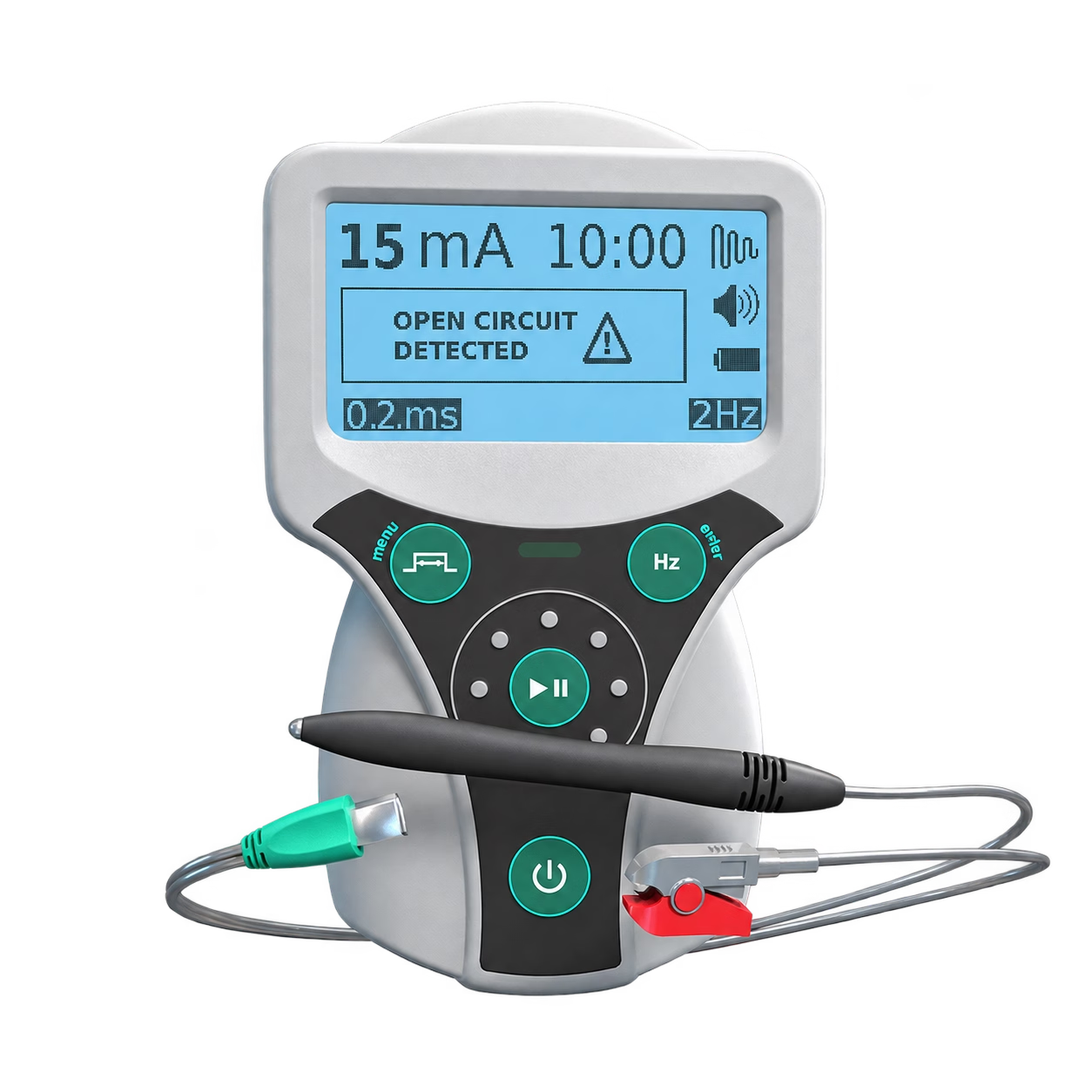
The goal is to influence pain signaling with focused stimulation. The treatment stays on the surface of your skin.
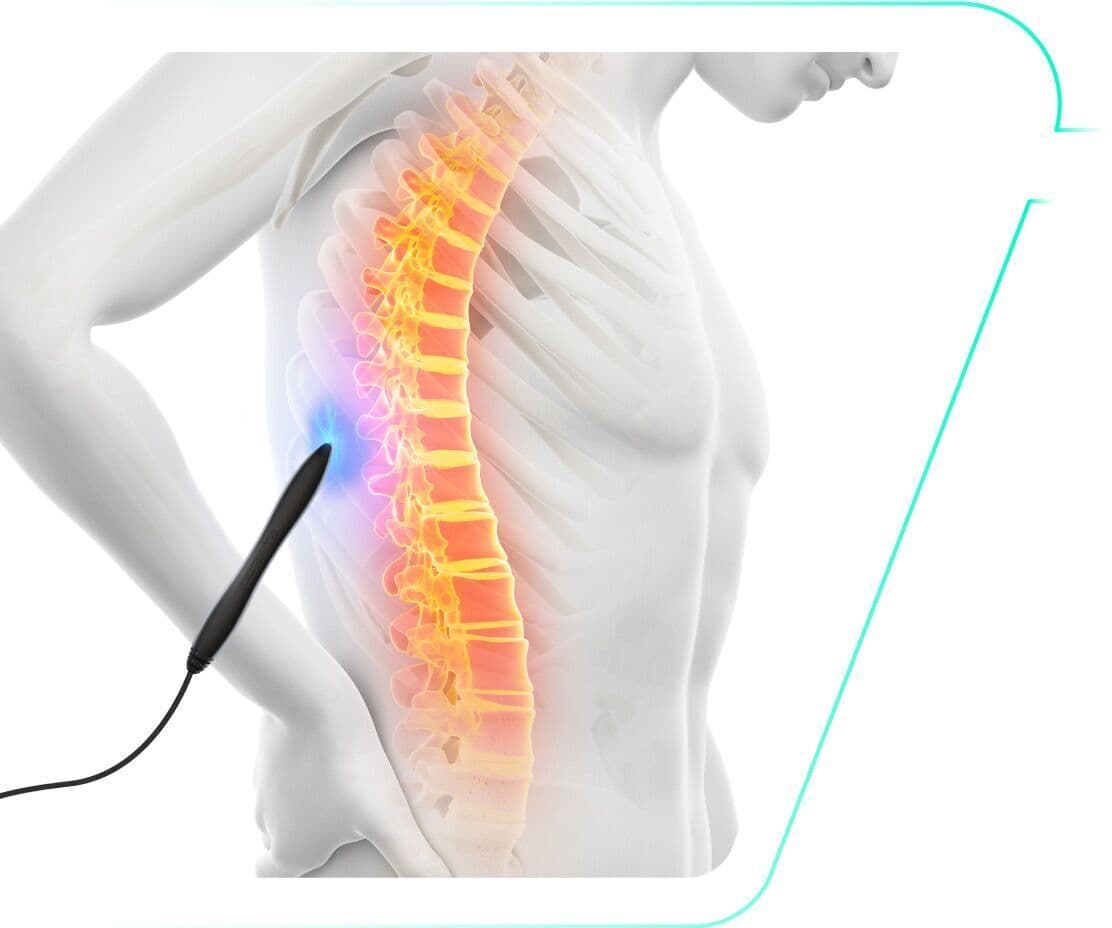
Your clinician assesses your symptoms and identifies a suitable nerve pathway and treatment site.
A small amount of conductive gel helps the probe deliver stimulation through the skin.
The device can deliver a waveform combining electrical nerve stimulation with brief radiofrequency bursts. Intensity is adjusted with your feedback.
Your clinician reassesses symptoms and function, then decides how treatment fits into your rehabilitation plan.
Nerve pain has different causes. These are some of the conditions to discuss during your evaluation.
The device is cleared for temporary relief of mild-to-moderate neuropathic pain from diabetic peripheral neuropathy in the lower extremities.
Specific FDA-cleared indicationDiscuss shooting, burning, or radiating pain with a therapist to assess the cause and whether nerve stimulation is appropriate.
Requires individual assessmentHand or wrist pain with tingling may call for a focused nerve assessment and a broader plan to address pressure and function.
Requires individual assessmentNerve stimulation may be used alongside rehabilitation to help manage postsurgical or acute post-traumatic pain.
Adjunctive pain managementFor ongoing pain, an evaluation can help identify a nerve-related component and which treatment options fit your needs.
Personalized pain assessmentComplex symptoms need a tailored plan. Ask whether targeted stimulation has a role alongside your current care.
Evidence varies by diagnosisThe device also has cleared uses for chronic intractable pain and pain management alongside rehabilitation. A listed condition does not mean treatment is suitable for every person or that benefit is guaranteed.
The probe stays on your skin. Treatment does not require an incision, injection, or implanted device.
Selected nerve pathways receive stimulation, with settings guided by your clinician and your comfort.
Pain management can be combined with exercise and rehabilitation as you work toward walking, moving, and daily activities.
Review what hurts, how it affects daily life, your health history, and the results you want to work toward.
The relevant area of skin is exposed. Your clinician locates the stimulation site and explains what you may feel.
Give feedback during the session. Your clinician checks your response and discusses follow-up care.
A randomized, placebo-controlled study in diabetic peripheral neuropathy reported symptom improvements after three treatments. Findings support potential short-term relief; they do not establish a cure or guaranteed lasting benefit.
View study registration ↗A little clarity can make it easier to decide what comes next.
The device is classified as a transcutaneous electrical nerve stimulator. It also offers a hybrid waveform with a pulsed radiofrequency component, delivered through a targeted handheld probe. That difference does not mean it is the right treatment for everyone.
You may feel tingling, a light pinprick sensation, or muscle movement. The clinician adjusts the settings with your feedback. Let them know if a site feels uncomfortable.
Responses vary. Some patients report early improvement, while others need further assessment or a different approach. Your clinician will monitor your response rather than promise a fixed number of sessions.
The device documentation lists contraindications including pacemakers, implanted defibrillators, other implanted metallic or electronic devices, and undiagnosed pain syndromes. Your clinician must review your health history and the device instructions before treatment.
Ask our team about treatment availability, pricing, and any applicable coverage before you begin. A general physical therapy benefit does not automatically establish coverage for this treatment.
You don’t need to choose a treatment on your own. Tell us you’re interested, and our team can help you take the next step toward an evaluation.
Prefer to call?
561-523-2299
Pod Therapy is a service name. Treatment suitability and outcomes vary.